Bird flu is in the news again. On 2 October 2026, bird flu subtype H5N5 was confirmed at a poultry premises in Ness, Isle of Lewis.[2] The Scottish Government reported a 3 km protection zone and a 10 km surveillance zone around the premises.[2] On 9 October, Defra urged all bird keepers to review and strengthen biosecurity as migratory wild waterfowl returned to the UK for winter.[1]
For a small backyard flock, biosecurity means ordinary habits that make it harder for disease to reach your hens or travel between bird areas.[1][3] It is not a guarantee, and this article is not a guide to diagnosing disease or treating birds. It focuses on keeping the area, feed, footwear and routine as clean and separate as practical. Government restrictions can change, so always check the current notice for your location before deciding what your flock may do.[4][5][6]
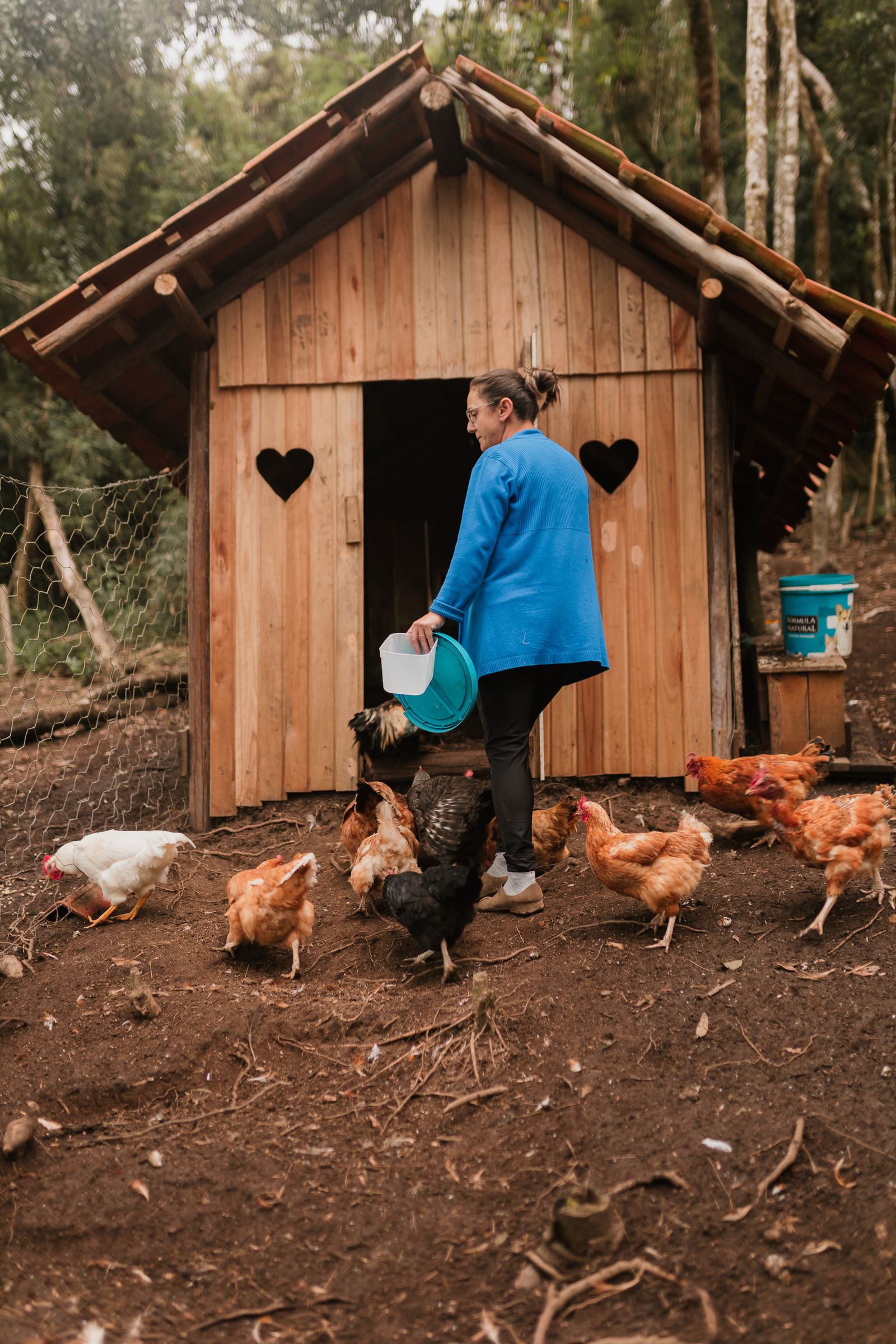
Photo by Alexander Mass via Pexels. The photograph is illustrative, not a model of an entry or cleaning routine.[7][8]
Start with the rules for your area
A general article cannot tell you whether your home is inside a disease control zone or what restrictions currently apply to your flock.[2][4] Those details depend on location and can change.[2][5] The protection and surveillance zones around the Lewis premises have special rules for premises within them. They do not automatically mean the same restrictions apply to every flock in the UK.[2] The Scottish notice directs keepers to check the interactive map and follow the declaration if their premises is inside a zone.[2]
There are separate official pages for each part of the UK. The GOV.UK prevention guidance applies to England and links to guidance for Scotland, Wales and Northern Ireland.[3] Wales has its own current-restrictions section, while DAERA publishes Northern Ireland updates separately.[5][6] The GOV.UK situation page identifies the Ness case as the first outbreak of the 2026 to 2027 season and says Great Britain has lost its freedom from highly pathogenic avian influenza (bird flu) status.[4] DAERA publishes separate updates and requirements for Northern Ireland.[6] Check the rules for the nation where you keep birds before acting.
Before changing how you keep your birds, check the latest official situation page and any map or local declaration it links to.[2][4][5] Do not assume that hens must be housed, or that they may be let out, based on an old news story, a social post or advice written for another nation.[3][4][5] If a legal notice applies to your premises, follow that notice. It takes priority over this general checklist.[2][4]
Make the clean route easy
The best routine is one you can follow every time. Choose a clear place where you enter the coop or run. Keep everyday shoes and outdoor equipment from being carried through the bird area if you can. Have the items you need close to the entrance, rather than having to cross the run to fetch them.
Use footwear that is clean when you visit the birds, and clean it again after the visit.[1] Defra's 9 October reminder specifically includes cleaning footwear before and after visits.[1] A separate pair kept for the coop or run can make this easier.[3] Keep it in a dry, tidy place and do not wear it for unrelated jobs around the garden, especially where it could pick up mud, droppings or material from another bird area.[3]
If current official instructions require a disinfectant or a foot dip, follow those instructions and the product label.[3][5] Do not guess the dilution or rely on a dip as a substitute for removing visible dirt.[3] The details can depend on the product and the current rules. The practical point for a small flock is simple: keep the entry area orderly, use clean footwear, and do not carry dirty tools or shoes from one bird space to another.[1][3]
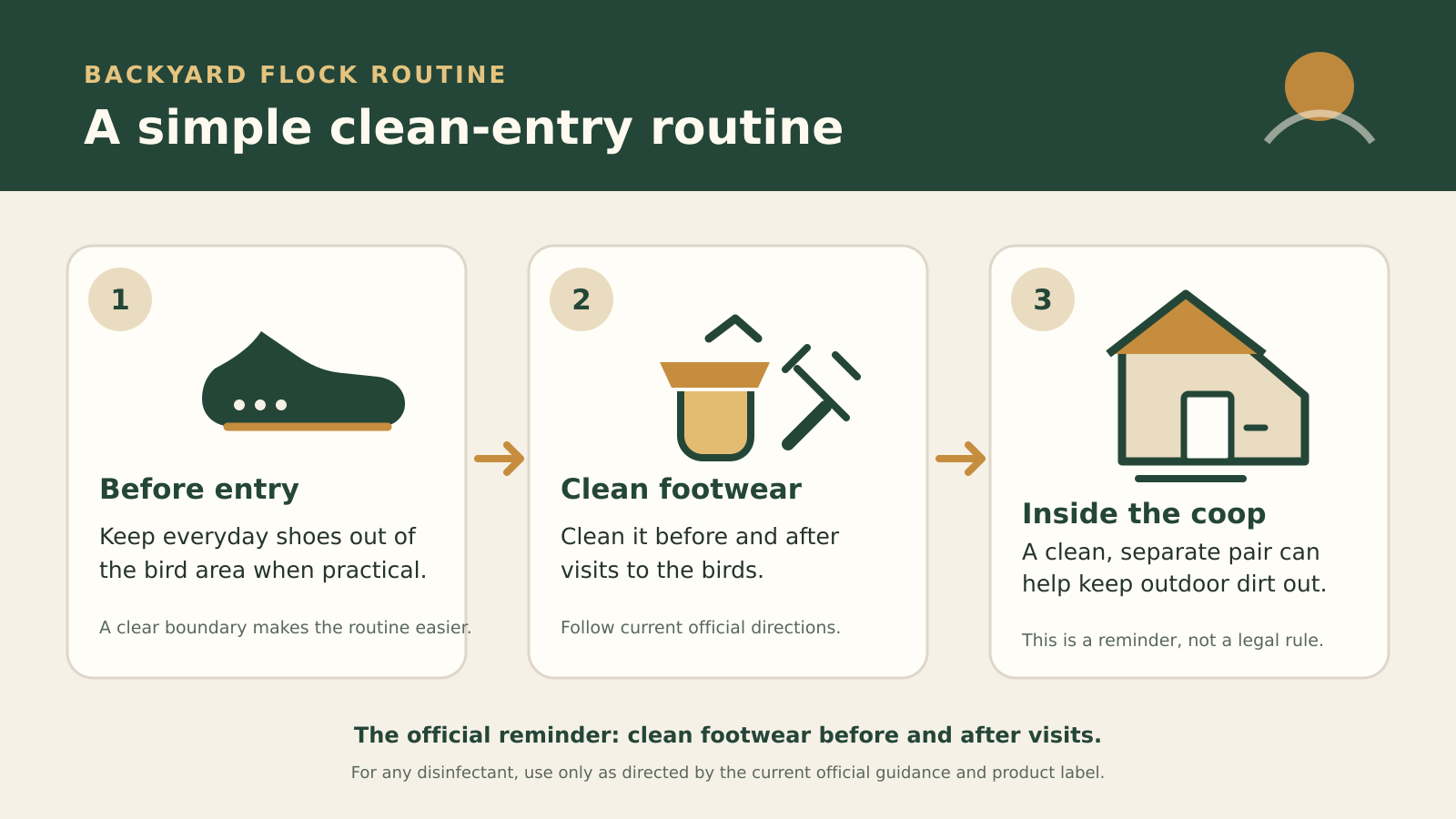
Original illustration for Chicken Keeping Guide. Follow the current official rules for your location and the instructions for any product you use.
Keep feed and water away from wild birds
Feed scattered around the run can attract visitors you did not intend to feed.[1] Place your hens' feed and water in an area that is protected from wild birds, and clear up spilled feed regularly.[1] These are among the practical actions in Defra's current autumn reminder.[1]
At the start and end of the day, take a quick look at the feeding area.[1] Brush up spilled grain, check that containers are where they should be, and close feed away when you are finished if your setup allows.[1] Keep feed in its usual container and avoid leaving scraps outside the protected area.[1] The aim is to make the poultry space less attractive to wild birds and reduce the chance of droppings or other contamination reaching food and water.[1][3]
Check that the cover or enclosure around the feeding point has not shifted, torn or been left open.[1][3] A small gap can make a covered area less useful.[1] Repair problems promptly, using a setup that is safe for your hens and suited to your run. Make sure the birds can still reach their normal food and water without being crowded or trapped.
Do not move feeders and drinkers between different flocks without cleaning them first.[3] If you keep ducks or geese as well as chickens, keep the groups separate where you can.[1][3] Defra's reminder advises avoiding keeping ducks and geese with other poultry species where possible.[1] If you cannot keep separate buildings, ask the relevant official source for advice that fits your premises instead of improvising a new arrangement during a restriction.[2]
Review the run and the edges of the garden
Walk around the outside of the run and look for places where wild birds can reach feed or water.[1][3] Check gates, fencing, covers and gaps at ground level.[1] Clear up spilled feed near the entrance, because a tidy poultry area is easier to inspect and less likely to attract rodents or wild birds.[1]
Look at nearby ponds, standing water and places where waterfowl gather.[1][3] Current official advice includes fencing or covering ponds and limiting access to areas visited by wild waterfowl.[1][3] A backyard keeper may not be able to change the wider garden, but can review where the hens spend time and whether feed or drinking water is exposed.[1] Do not put food out for wild birds beside the run, and avoid leaving bowls, buckets or open containers where rainwater collects.[1][3]
Keep the setup safe as you make changes. A cover should not sag onto the birds, block their normal access to shelter, or leave loose material where they might become caught. Check any barrier after wind or heavy rain. If current restrictions require housing or specific separation, follow the notice rather than treating this general advice as permission to use the run as usual.[2][4][5]
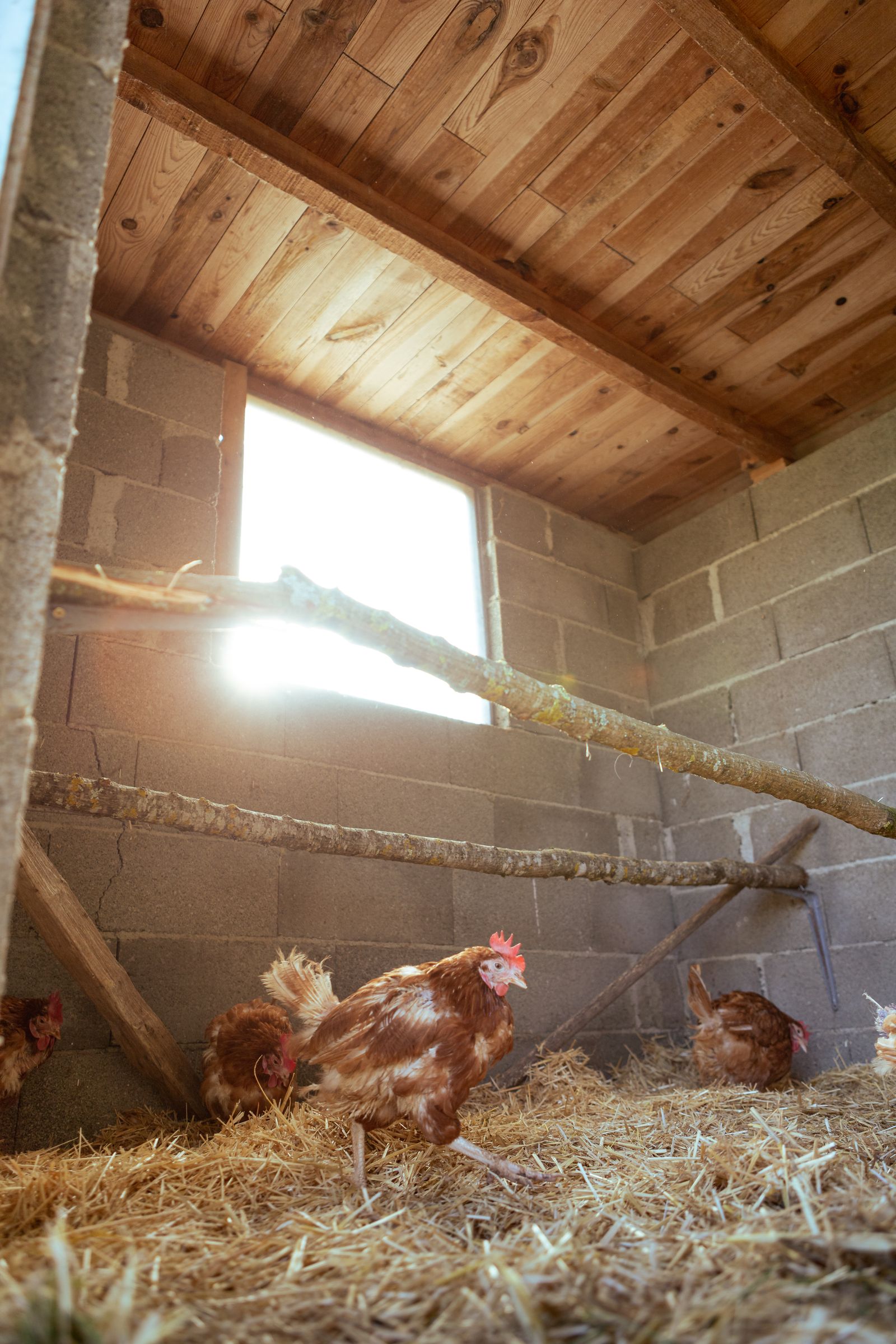
Photo by Andreas Ebner via Pexels. This photograph is illustrative and does not establish that a particular coop meets current requirements.[7][9]
Keep the coop and tools in order
A quick, regular tidy is easier than allowing jobs to build up. Keep the area where the birds live clean and tidy.[1] Remove spilled feed and waste as part of your normal routine, and clean hard surfaces when needed.[1] Defra's current reminder also advises controlling rats and mice and regularly disinfecting hard surfaces.[1]
Use any disinfectant only for the purpose and in the way stated on its label and the relevant official guidance.[3][5] Keep it away from drinking water and surface water, following the current instructions for your nation.[3][5] This article does not recommend a particular brand or chemical routine.
Keep a small set of tools for the poultry area if practical.[3] A scraper, brush or bucket that is used for the coop should not be taken straight to another flock or shared with a neighbour.[3] If equipment has to be moved, clean it first and follow the relevant official instructions.[3] The same idea applies to crates, egg trays and other items that may pass between bird areas.[3]
You do not need a complicated log for an ordinary daily visit. A short note can help you remember when you cleaned the coop, checked the run or repaired a cover. If you are in a disease control zone, the official declaration may require particular records.[2] Use the declaration for those duties, rather than relying on a generic notebook routine.[2]
Make visits and chores predictable
Decide what you need before you enter the run: feed, water, eggs, cleaning tools or a torch. Gather the items first so you are not walking in and out repeatedly.[3][5] Keep visitors away from the birds unless there is a good reason for them to enter.[3][5] If someone does need access, explain the clean-footwear routine before they arrive.[1][3]
If you keep more than one group of birds, keep the groups separate where practical and avoid carrying the same dirty footwear or equipment between them.[1][3] Use a clean pair and clean tools for each bird area if possible.[3] This is a practical routine, and it does not replace any official rule for a disease control zone.[2]
When you have finished, put away equipment, close feed containers and check that gates or covers are back in place.[1][3] Clean footwear after the visit.[1] A routine that ends with the same few checks is less likely to be forgotten when the weather is poor or the day is busy.
When the rules change
Autumn is a sensible time to review your setup because Defra's 9 October notice said migratory wild waterfowl were returning to the UK and urged keepers to strengthen biosecurity.[1] The situation can change after a new case or a change in restrictions.[2][4] Keep the official pages for your nation bookmarked, and check them again when you hear about a nearby outbreak or before changing how your birds are housed or allowed outdoors.[2][4][5] DAERA publishes separate updates for Northern Ireland.[6]
If a map shows that your premises is inside a control zone, read the full declaration.[2][4] A short news summary may omit rules about movement, access, equipment or records.[2] Follow the instructions for the exact zone and contact the relevant government department if anything is unclear.[2][4] Keep the declaration or official link handy so anyone helping with the flock can follow the same rules.[2]
This guide cannot tell whether a bird has bird flu or any other illness. If you are concerned about your flock, use the current official guidance for your nation.[2][3][5] DAERA provides separate information for Northern Ireland.[6][13] If you find a dead wild bird, do not touch or move it.[11][13] Use the GOV.UK reporting page for England, Scotland and Wales, or the DAERA guidance and reporting tool for Northern Ireland.[11][12][13]
A short routine to keep by the door
Before entering: Check the latest local rules if restrictions have changed.[2][3][4] Gather what you need, leave everyday footwear outside the bird area where practical, and use clean footwear.[1][3]
While caring for the flock: Keep feed and water protected from wild birds and clear spills.[1] Keep visitors to a minimum and clean equipment before moving it between bird areas.[3][5]
After the visit: Put tools away, close feed, check gates and covers, and clean footwear.[1][3] Note any maintenance job that needs doing before your next visit.
When you hear about a new case: Check the official update for your nation and the relevant map.[2][4][5] Do not rely on a headline, an old screenshot or an article that was written for a different location.[2][4]
Common questions
Do I need to shut my hens in because bird flu is in the news?
This article cannot determine that for your address. Housing and other controls depend on current official requirements and on whether your premises is in a disease control zone.[2][3][4] Check the relevant government update before changing your routine.[2][4][5] Northern Ireland publishes separate updates through DAERA.[6]
Is a disinfectant footbath enough?
Do not assume it is. Keep footwear clean and follow the latest official guidance and the product label.[1][3] If the instructions call for cleaning before disinfection, do that first.[3] This article does not set a chemical or footbath procedure.
Can I use the same equipment for another flock?
Avoid moving dirty tools or footwear between bird areas.[1][3] Clean equipment before it is moved, and use any additional separation measures required by current official instructions.[3]
What should I do if I find a dead wild bird?
Do not use this article to decide what caused the death, and do not touch or move the bird.[11][13] Follow the correct reporting route: GOV.UK for England, Scotland and Wales, or DAERA for Northern Ireland.[11][12][13]
The useful takeaway
A few steady habits make a biosecurity routine easier to follow: keep feed and water protected from wild birds, clean up spills, use clean footwear and keep tools in order.[1][3] The October 2026 alert is a reason to review those basics and confirm the current instructions for your own location.[2][4][5] DAERA provides a separate update page for Northern Ireland.[6]
Image credits and use
The two photographs are credited to Alexander Mass and Andreas Ebner on Pexels.[8][9] Pexels says its images can be used for free, including commercially, and that attribution is not required; the photographer credits are included here as a courtesy.[7][10] The footwear diagram is an original illustration created for this draft.
Sources
- Bird keepers reminded to take action to protect against avian influenza as disease returns to the UK
- Avian flu: Ness, Isle of Lewis (AIV 2026/20)
- Bird flu: how to prevent it and stop it spreading
- Bird flu: latest situation in England
- Avian influenza: GOV.WALES
- Avian influenza latest situation: DAERA
- Pexels photo and video license
- Woman feeding chickens near rustic coop: Alexander Mass on Pexels
- Hens in a chicken coop: Andreas Ebner on Pexels
- Can I use Pexels photos and videos for a commercial project?
- Report dead wild birds: GOV.UK
- DAERA Dead Wild Bird Online Reporting Tool
- Wild birds and advice for the public: DAERA