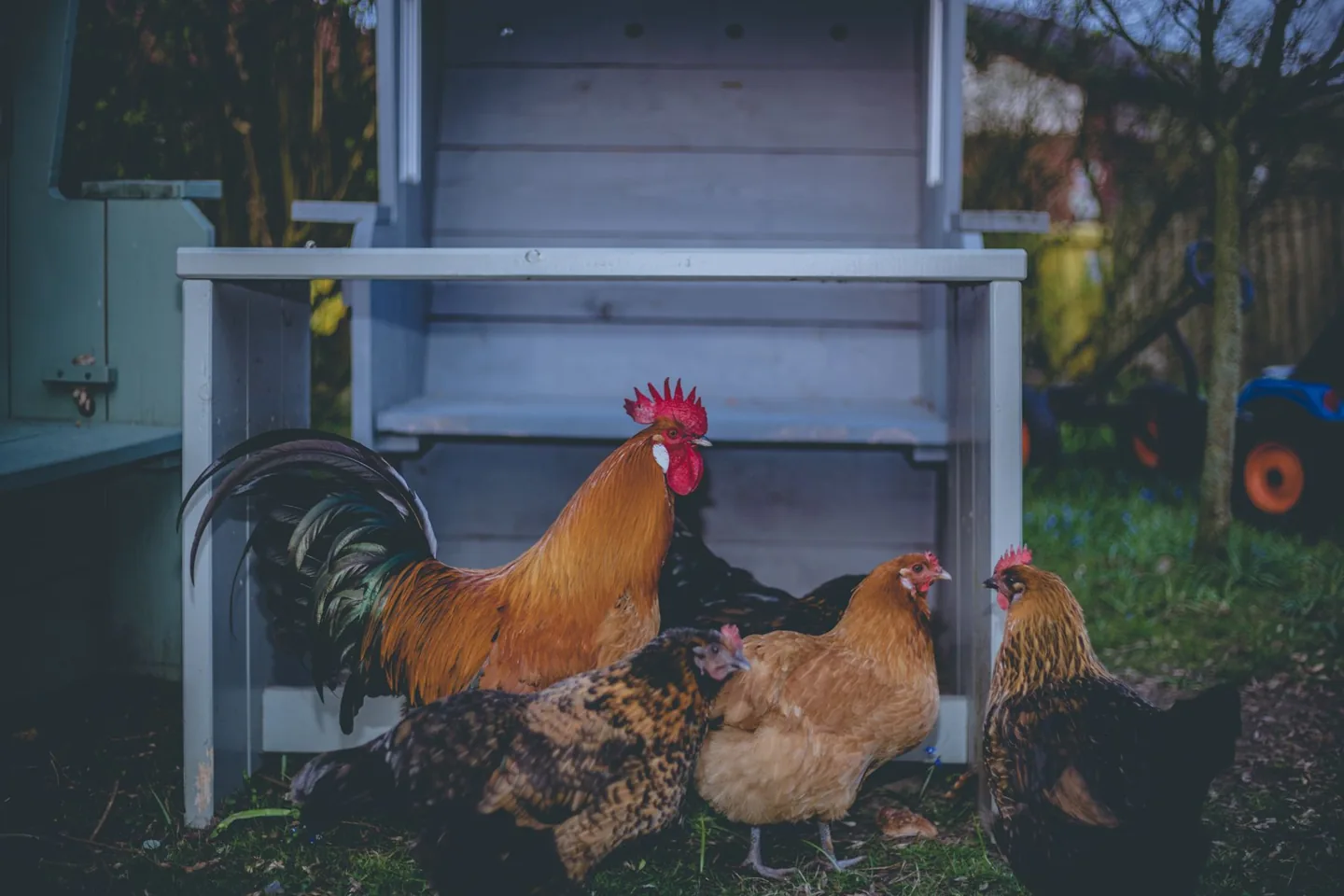
The government welfare code covers backyard and smallholding hens as well as commercial systems. It emphasises suitable environment, appropriate diet and protection from pain, injury, suffering and disease.[1]
Six tests for any chicken house
Rain stays out, moisture can leave, litter remains friable and drainage moves water away from the run.
High-level airflow removes moisture and ammonia without directing a cold draught at roosting birds.
Mesh, floors, roof, pophole and human door resist digging, pulling, reaching and simple latch manipulation.
You can see every bird, reach every corner and check beneath perches without dismantling the structure.
Surfaces, trays and fixtures can be removed or accessed. Cracks and hidden voids are minimised.
The setup can isolate a bird, add shade, protect water from frost and respond to temporary disease controls.
Think in functional zones
Stable, accessible perches with safe landing space and no sharp edges.
Quiet, darker nest areas that remain accessible for inspection and cleaning.
Separate resource points, sheltered from rain and inaccessible to wild birds where possible.
Dry scratching areas, dust-bathing material, cover and enrichment that can be rotated.
A ready isolation pen with independent equipment and low-stress access.
Predator resistance is a system
“Chicken wire” describes a lightweight containment mesh; it should not be treated as proof against determined predators. Inspect joins, edges, roof, ground line and latches as one continuous barrier. Test doors in wind and with bedding in the runners.
- Welded mesh suitable for the expected threat
- Protected ground edge or anti-dig design
- Two-action or lockable latches
- No gaps around eaves and service entries
- Run roof or overhead protection where needed
- Daily inspection after storms and ground movement
Questions before any purchase
Capacity: Is the quoted number based on birds sleeping shoulder-to-shoulder, or on a comfortable whole setup?
Access: Can an adult reach a sick bird immediately?
Weather: What happens in horizontal rain, frost, heat and power failure?
Maintenance: Which parts wear, and can they be replaced in the UK?
Cleaning: Can feeders, drinkers, trays and perches be removed without tools?
Failure: If an automatic component stops, is there a simple manual override?