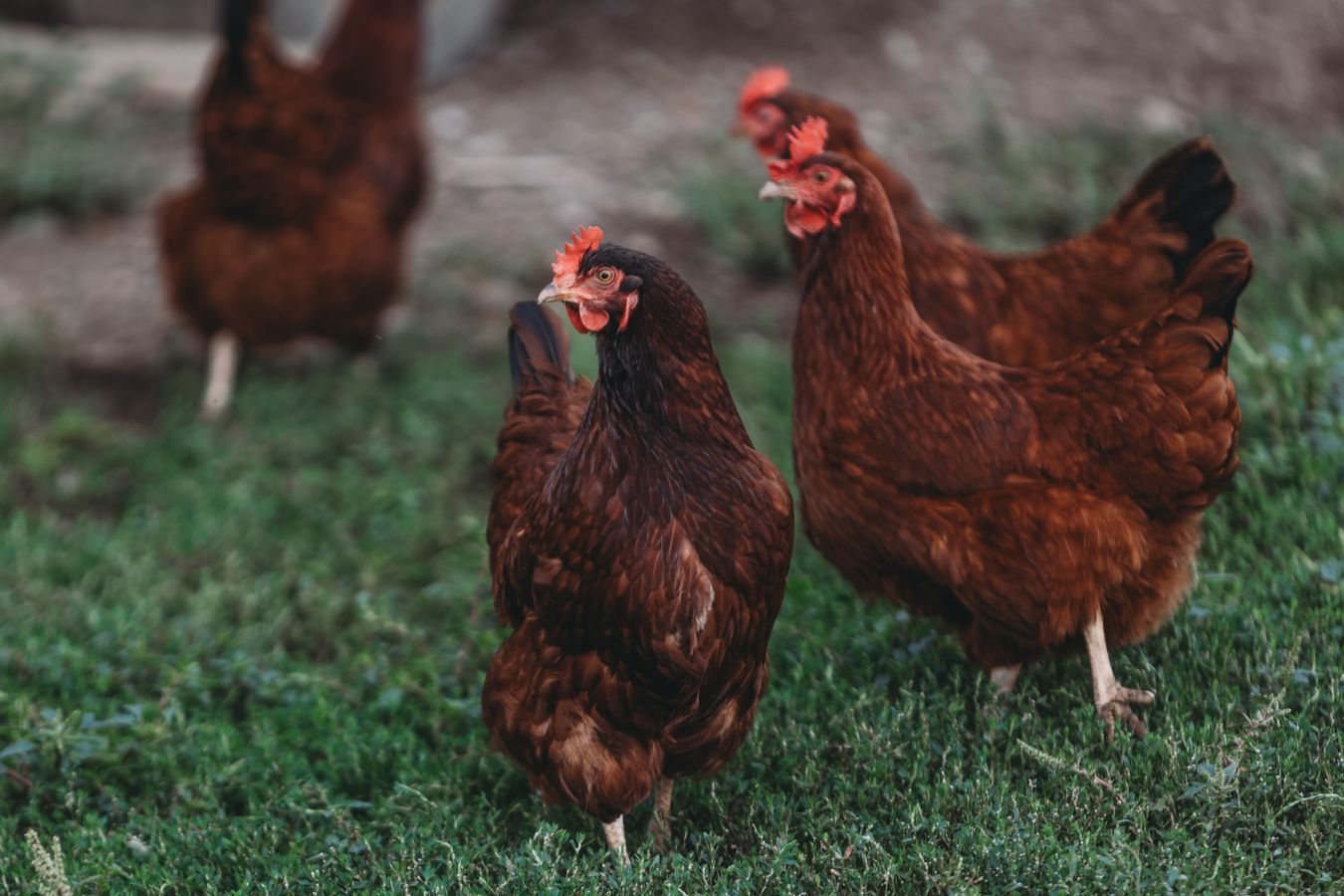
A quick peck or a bird stepping aside can look alarming when you first notice it. Chickens do have social relationships, and some brief disputes happen as birds establish or maintain their place in a flock. The useful question is whether the interaction ends and every hen can still eat, drink, rest and move around, or whether one bird is being persistently targeted or prevented from reaching resources.[1][2]
What does “pecking order” mean?
“Pecking order” is the familiar name for a flock’s social hierarchy, which can affect how birds interact and who yields space or priority at a particular moment.[2] It does not explain every peck, chase or change in behaviour, and it should not be used to dismiss signs of distress. Feather pecking can become injurious, and its causes may involve several aspects of bird health and management.[3]
A single peck does not tell you that a hen is a bully or that the flock is in trouble.[1] Look at what happens before and after it, which birds are involved, how often it occurs, and whether the recipient can move away and return to normal activities.
What may be ordinary flock behaviour?
You might see a hen give a brief peck, another bird move away, or one bird take a preferred spot. If the exchange stops, the birds settle and all can use the space and resources, observe the flock rather than reacting to one moment. The RSPCA describes some dominant behaviour during flock introductions as natural, while warning that consistent bullying and broken skin need intervention.[1]
There is no single peck count that separates normal from harmful behaviour. Context matters. A quick displacement around a treat is different from repeated chasing that follows the same hen around the run. A bird that moves away and later returns to feed is in a different position from one that cannot get to food or water without being driven off.
A peck is an action, not an explanation
Chickens use their beaks for several everyday behaviours, including feeding, preening, exploring and moving objects. Seeing a bird peck at the ground, litter or an object does not by itself tell you that she is attacking another hen.[7] Even when a bird pecks another bird, the context and result matter. Brief contact that stops when the other bird moves away is different from forceful, repeated pecking that pulls feathers, damages skin or leaves the recipient unable to settle.[3]
The BVA describes injurious feather pecking as a significant welfare concern. Its policy notes that affected birds can suffer feather loss and skin damage, and that the behaviour has multiple possible risk factors. The BVA policy focuses on laying hens, so it is not a diagnostic guide for an individual backyard bird. Its central caution still matters to keepers: persistent feather damage should not automatically be explained as a harmless social disagreement.[3]
Why might behaviour change?
A shift in behaviour is a reason to look at the whole situation, not to assign blame to one hen. Changes in the group, a new arrival, changes to the environment or routine, access to food and water, health, lighting and foraging opportunities can all be relevant to injurious pecking risk. The BVA lists several of these factors in its laying-hen policy and warns that sudden changes in management or environment can also be a stressor.[3]
That does not mean every change causes pecking, or that one checklist can identify the cause. A hen that begins to avoid a flockmate may be responding to a social interaction, discomfort or another change. A bird with feather loss may need a health assessment as well as a review of flock management. The observation is useful; a diagnosis from appearance alone is not.
When the behaviour is new, note what else has changed recently. Have birds been added or removed? Has access to a run, feeder, drinker or resting place changed? Has the routine, lighting or diet changed? Is the hen eating, drinking and moving as usual? Record what you know without making a sudden series of changes to test guesses. If the pattern persists, take those notes to a poultry-friendly vet.[3]
How to observe the whole flock
Watch at more than one time of day, including when feed and water are available and when the birds are settling. Keep observations factual. Note the date, birds involved, location, what happened, how long it lasted, and whether the hen returned to eating, drinking, resting or foraging.
Look for patterns such as:
- one bird repeatedly pursuing or pecking the same flockmate;
- a hen hiding, staying apart, or appearing unable to settle;
- a bird being driven away from feed, water, a nest or a resting area;
- persistent feather damage, bare areas, wounds or blood;
- a change in appetite, drinking, movement or general behaviour.
These observations do not diagnose a cause. They help you describe what you are seeing if you need to ask a poultry-friendly vet or welfare organisation for advice. Feather pecking is a complex behaviour with multiple possible risk factors, so avoid assuming that one bird’s temperament is the whole explanation.[3]
Keep a short observation record
A brief record makes it easier to see whether the same pattern is repeating. You do not need to watch the flock continuously or label a hen as “top” or “bottom”. Write down what you actually saw:
- date and approximate time;
- the birds involved, using names or simple descriptions;
- where the interaction happened and what the birds were doing beforehand;
- what each bird did, and whether the other bird moved away;
- whether the interaction stopped, restarted or spread to another bird;
- whether the affected hen later ate, drank, rested and rejoined the flock;
- any visible feather or skin change, and any change in appetite or movement.
Keep observations separate from guesses. “Hen A pecked Hen B three times beside the feeder, then Hen B left and did not return during my observation” is more useful than “Hen A is jealous and Hen B is at the bottom”. A brief note across several ordinary routines may reveal that the problem occurs in one place or around one resource. If an injury or marked distress is already present, do not delay seeking help while building a record.
Compare like with like
A flock may be quieter at some times than others. Compare what you see during normal feeding, foraging and settling rather than relying on one unusual encounter. If the behaviour has changed, compare with your own earlier notes and with what is normal for that individual hen. A bird that has always been cautious may behave differently from a previously confident bird that has started avoiding the run.
Do not try to provoke an interaction to see what happens. Do not crowd the birds or repeatedly move them to recreate a dispute. The aim is to observe ordinary flock life without adding stress. If the situation appears unsafe, put welfare first and ask a veterinary professional for guidance.
When should you step in?
Take persistent targeting seriously, especially if the same hen cannot get away, cannot access essentials, or has damaged skin. The RSPCA advises separating birds when bullying becomes consistent and skin is broken.[1] Blood, an open wound, a bird that seems unwell, or a marked change in normal behaviour warrants prompt advice from a veterinary professional. Do not wait for a pecking-order explanation if a bird is injured or distressed.
If there is an immediate risk of further injury, prioritise safety and seek veterinary guidance on what to do next. This article cannot assess an individual bird or give treatment instructions. Avoid relying on internet remedies or handling a frightened or injured hen without suitable advice.
Review the setup as well as the behaviour
A flock’s environment can affect how easily birds avoid one another and reach resources. Check whether every hen can get to food and water, whether there are places to move out of sight, and whether the birds have enough usable space to spread out. The RSPCA recommends visual barriers and more than one feeder or drinker to help birds share access.[1]
Make observations before making broad changes. Sudden changes to the environment or management can themselves be a risk factor for injurious pecking, according to the British Veterinary Association. If the problem is recurring, review changes in the flock, housing, lighting, diet and routine with a poultry-friendly veterinary surgeon rather than guessing at a single cause.[3]
Do not treat a larger enclosure or extra equipment as a complete answer when an individual bird is already being injured. Persistent bullying, wounds or problems accessing food and water need a response tailored to the flock and the affected hen.
Check whether every hen can use the resources
Stand back and watch a normal feeding period. Can the quieter birds approach a feeder and drinker without being chased away? Does one bird guard a narrow doorway or the only route to a preferred area? Are the resources placed so that one hen can block access to all of them at once? The RSPCA recommends more than one feeder and drinker, placed so birds can share access, and visual barriers that give hens places to move away.[1]
The point is to check what happens in your particular layout, not to assume that simply adding equipment will solve every conflict. Multiple stations only help if birds can reach them and if they are not all clustered where one bird can control them. If you make a change, watch how the flock uses it and note whether access improves. Do not make several sudden changes at once, because that makes it harder to tell what helped and abrupt management changes may add stress.[3]
Look at routes and places to move away
Notice whether a hen can leave an interaction without being cornered. A dead end, narrow entrance or single route between the house and run may make it harder for a bird to avoid another. The RSPCA’s general guidance recommends visual barriers and areas of varied height as ways to help chickens get away from others.[1] Check that the layout still allows you to see the birds and inspect the space. Do not add an obstacle that creates a trap or blocks access to feed, water, shelter or a safe resting place.
Think about the flock’s routine as well as its floor plan. Birds may meet around a preferred resting spot, nest area or feeding time. Record where the behaviour happens and whether it changes when the birds are elsewhere. That gives you a practical starting point for a discussion with a poultry-friendly vet or experienced welfare adviser.
Keep changes measured
If your review points to a possible management issue, avoid a rushed overhaul based on a single observation. The BVA advises close monitoring and veterinary involvement when management changes are needed to address feather-pecking risk.[3] Agree a sensible plan with a suitable professional when behaviour is persistent or damaging, then record what you changed and what happened afterwards.
This is especially important when several things have changed together. Changing the group, feed, lighting and run arrangement at once can make it difficult to understand the flock’s response. A measured review does not mean leaving an injured bird at risk. Immediate welfare concerns take priority; planned adjustments are for the broader setup once the immediate risk is addressed.
Introducing new hens
Mixing unfamiliar birds can lead to aggression. The RSPCA suggests beginning with a “see but no touch” period, then allowing short periods in shared space over several days and increasing contact gradually as the birds are ready.[1] The right pace depends on the birds and their circumstances; a fixed timetable cannot guarantee a safe introduction.
Stay nearby to observe interactions, make sure birds can move away, and check that each can reach food and water. If bullying becomes consistent or skin is broken, separate them and get appropriate advice. For detailed flock-merging support, consult the British Hen Welfare Trust’s guidance and contact a poultry-friendly vet if you are unsure how to manage a difficult introduction.[1][2]
An introduction is more than the moment birds first share a run. Keep observing after the first meeting and during the following routines, including access to food, water and shelter. A calm first encounter does not prove that the arrangement is working for every bird. If problems reappear later, return to your observations and review where they happen, whether one hen is repeatedly targeted, and whether the flock’s setup still gives each bird a way to move away.
Do not assume that one method or schedule will suit every group. Age, size, temperament, health and the space available can affect how an introduction goes. Where health status is uncertain, ask a vet or reputable poultry-welfare organisation about safe separation and biosecurity before mixing birds. The RSPCA’s suggested staged introduction is guidance to adapt to the birds’ welfare, not a guarantee that aggression will not occur.[1]
Common questions
Should I stop every peck?
A brief interaction that ends and leaves both birds able to continue normal activities is different from persistent chasing or injury. Watch the pattern and the outcome rather than reacting to a single peck. Step in or seek advice when bullying becomes consistent, skin is broken, a hen cannot access resources or she appears distressed.[1]
How long does it take for a flock to settle?
There is no reliable deadline that proves an introduction is safe. Flocks and individual birds differ. The useful signs are whether interactions are easing, each bird can move away, and all can eat, drink and rest. If the behaviour remains persistent or anyone is injured, do not wait for a guessed timetable; seek appropriate help.[1][2]
Does a featherless patch always mean another hen is pecking her?
No single appearance identifies the cause. Feather loss can have more than one explanation, and a bird’s health and the flock’s environment may both need review. Record what you see and ask a poultry-friendly vet if the change is new, worsening or accompanied by skin damage or other signs of illness.[3]
Should I permanently remove the bird that starts the pecking?
This article cannot prescribe a separation plan for an individual flock. Removing or reintroducing birds can alter the group again, and an injured hen may need professional assessment. If there is immediate danger, prioritise safety and get veterinary or welfare guidance on the next step. For ongoing conflict, discuss the birds and their setup with someone qualified to advise.[1][3]
A simple decision guide
- Brief interaction, then normal activity: keep observing and note any change in pattern.
- Repeated chasing or blocked access: check the setup and seek experienced welfare advice if it continues.
- Broken skin, blood, an open wound or a distressed bird: act promptly to prevent further harm and contact a veterinary professional.
- Sudden or persistent behaviour change: describe what you have observed to a poultry-friendly vet rather than assuming it is only social rank.
A pecking order is one part of flock life, not a reason to ignore what an individual hen is showing you. Watch the pattern, make sure every bird can reach what she needs, and ask for help when behaviour is persistent or anyone is injured.